brought to you by: Dave Williams
This page: www.bacomatic.org/~dw/fordv8/boss429/boss429.htm
Main page: http://www.bacomatic.org/~dw/index.htm
Last Updated: 16 Jul 2003
Author: Dave Williams; dlwilliams=aristotle=net
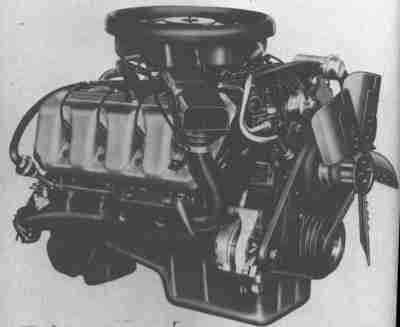 1970 BOSS 429.
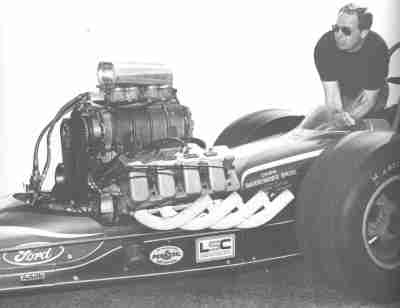 Before putting the BOSS 429 into the Mustang, Ford released it to selected
racers as a crate motor like they sold the 427 SOHC. This one is in Connie
Kalitta's Top Fuel dragster.
Before putting the BOSS 429 into the Mustang, Ford released it to selected
racers as a crate motor like they sold the 427 SOHC. This one is in Connie
Kalitta's Top Fuel dragster.
 The intake rocker was very short and the exhaust rocker very long, the same
way the Chrysler Hemi or Ardun Fords were laid out. They were simple steel
forgings running on bronze bushings. Ford apparently felt that roller
bearings weren't necessary.
The intake rocker was very short and the exhaust rocker very long, the same
way the Chrysler Hemi or Ardun Fords were laid out. They were simple steel
forgings running on bronze bushings. Ford apparently felt that roller
bearings weren't necessary.
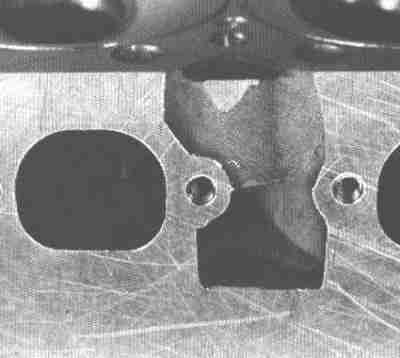 High exhaust ports are reminescent of later high-ported 351C designs.
Flattened floor improved flow at low lift.
High exhaust ports are reminescent of later high-ported 351C designs.
Flattened floor improved flow at low lift.
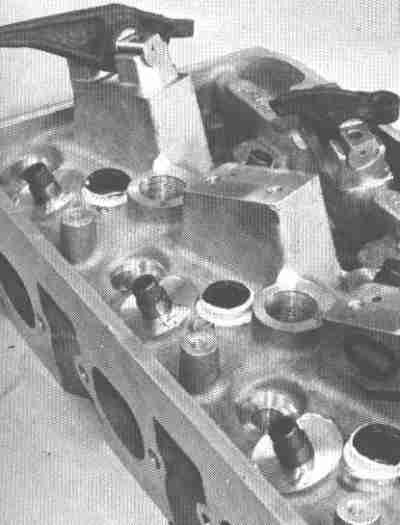 The BOSS 429 valves sit at compound angles just like a regular 429. Ford felt
shaft mounted rockers were more reliable for a racing engine, so the BOSS 429
got shaft mounted rockers. One shaft for every rocker! It took lots of
expensive machining in those pre-CNC days to do it.
The BOSS 429 valves sit at compound angles just like a regular 429. Ford felt
shaft mounted rockers were more reliable for a racing engine, so the BOSS 429
got shaft mounted rockers. One shaft for every rocker! It took lots of
expensive machining in those pre-CNC days to do it.
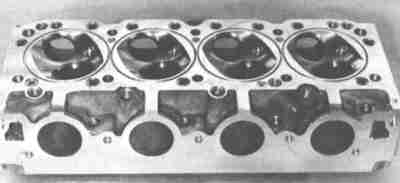 Intake and exhaust ports have nearly straight shots to the cylinders. Offset
was to promote swirl for more efficient combustion. This view of a T head
shows off the O-ring recesses.
Intake and exhaust ports have nearly straight shots to the cylinders. Offset
was to promote swirl for more efficient combustion. This view of a T head
shows off the O-ring recesses.
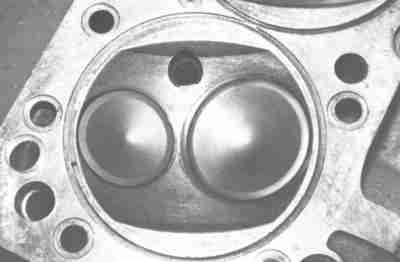 BOSS 429 T combustion chamber. The small quench ledges on each side are the
reason for the "semi-hemi" descriptor. The shallow counterbores around the
combustion chamber and various water holes are for O rings. Rubber O rings
seal water and oil; V-shaped Wills rings seal combustion pressure. No
conventional gasket was used.
BOSS 429 T combustion chamber. The small quench ledges on each side are the
reason for the "semi-hemi" descriptor. The shallow counterbores around the
combustion chamber and various water holes are for O rings. Rubber O rings
seal water and oil; V-shaped Wills rings seal combustion pressure. No
conventional gasket was used.
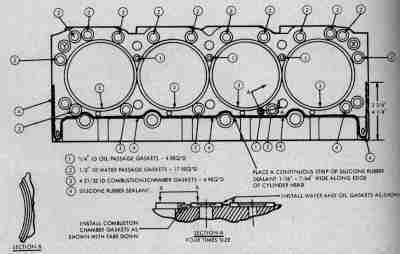 This is the T-series head sealing system. It uses rubber and metal crush
rings instead of a paper gasket. When the engine was torn down, the heads
came right off and the repaired engine could be reassembled at the track
without time-consuming scraping and cleaning of the gasket surfaces.
This is the T-series head sealing system. It uses rubber and metal crush
rings instead of a paper gasket. When the engine was torn down, the heads
came right off and the repaired engine could be reassembled at the track
without time-consuming scraping and cleaning of the gasket surfaces.
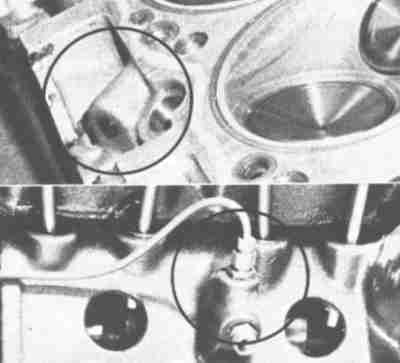 Regular production 429 and 460 blocks don't have the oil drillings for the
rocker shafts. To use BOSS 429 heads on these blocks you need to run separate
oil lines to the heads. The crossover block in the lifter valley is a
convenient place to pick up oil.
Regular production 429 and 460 blocks don't have the oil drillings for the
rocker shafts. To use BOSS 429 heads on these blocks you need to run separate
oil lines to the heads. The crossover block in the lifter valley is a
convenient place to pick up oil.
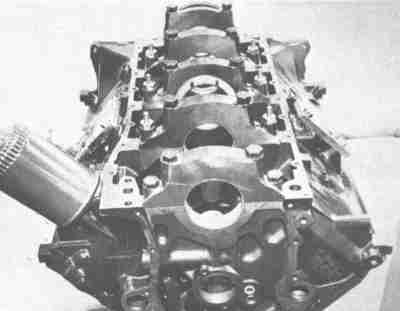 Four bolt mains on the BOSS 429 block. Other than the screw-in core plugs,
it's not much different from the four bolt Cobra Jet block.
Four bolt mains on the BOSS 429 block. Other than the screw-in core plugs,
it's not much different from the four bolt Cobra Jet block.
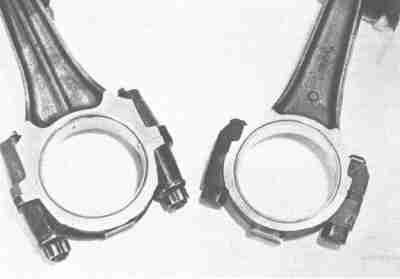 "T" rod on the left, with half inch rod bolts and pressure oiling to the
floating wristpin. "S" rod at right.
"T" rod on the left, with half inch rod bolts and pressure oiling to the
floating wristpin. "S" rod at right.
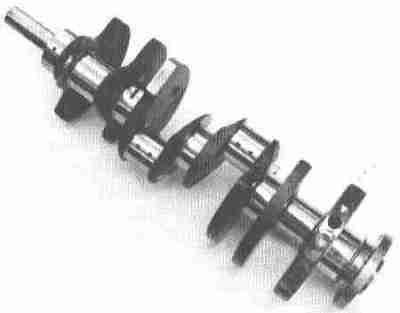 The BOSS 429 crank was forged steel as opposed to cast iron for all other
passenger car cranks. Some heavy truck engines also got a forged crank, but
I've never been able to make a direct comparison to see if they're the same
basic forging or not. The truck cranks have a larger diameter snout like the
FT variant of the FE.
The BOSS 429 crank was forged steel as opposed to cast iron for all other
passenger car cranks. Some heavy truck engines also got a forged crank, but
I've never been able to make a direct comparison to see if they're the same
basic forging or not. The truck cranks have a larger diameter snout like the
FT variant of the FE.
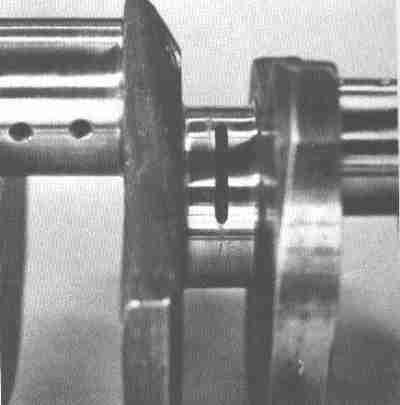 Oil lead-in groove was forged in, not ground. It was only done on the #2 and
#4 mains; #1, #3, and #5 had ordinary holes.
Oil lead-in groove was forged in, not ground. It was only done on the #2 and
#4 mains; #1, #3, and #5 had ordinary holes.
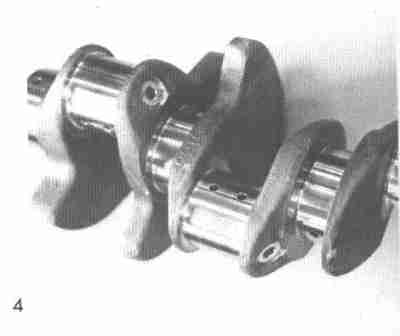 The crank featured a continuous oiling path from end to end, just like the
Indy 255 - any main bearing could feed all the rod bearings. The rod oil
holes are moved further down the sides to a more advantageous spot for feeding
oil. The rod throws have largish holes drilled through for lightness and to
act as "plenums" in the oil path. They also tended to centrifuge out any flak
in the oil and keep it from getting to the rod bearings.
The crank featured a continuous oiling path from end to end, just like the
Indy 255 - any main bearing could feed all the rod bearings. The rod oil
holes are moved further down the sides to a more advantageous spot for feeding
oil. The rod throws have largish holes drilled through for lightness and to
act as "plenums" in the oil path. They also tended to centrifuge out any flak
in the oil and keep it from getting to the rod bearings.